The Donauschwaben
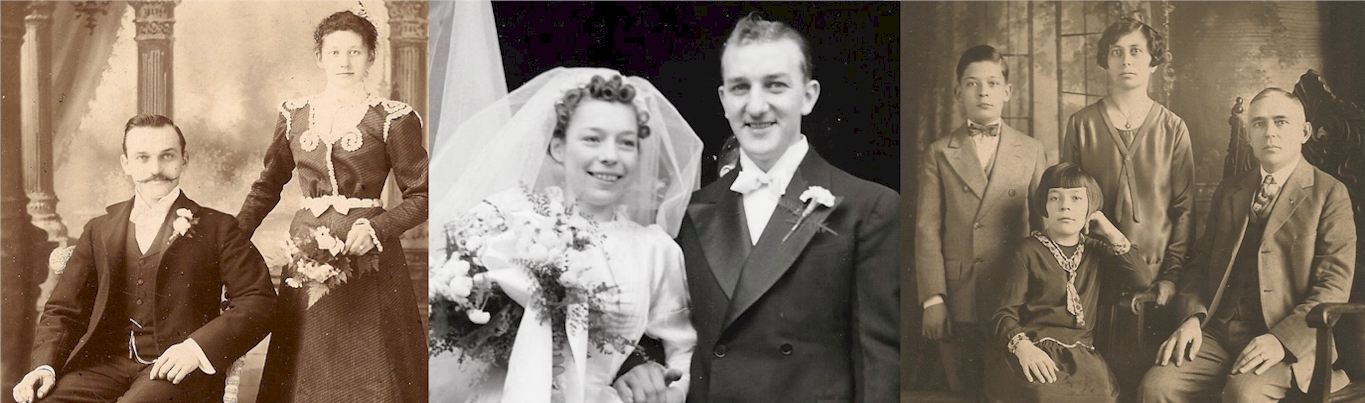
Wait! I thought we were German. So why talk about Serbia? And what does Yugoslavia have to do with my maternal grandparents Franz Kahles and Anna Quint? To answer these questions, let’s start with a little Wikipedia history lesson.
The Danube Swabians (in German – Donauschwaben – (doe’-now-schwaben)) is a collective term for the German-speaking population who lived in various countries of southeastern Europe, especially in the Danube River valley. Most were descended from 18th-century immigrants recruited as colonists to repopulate the area after the expulsion of the Ottoman Empire.
Because of different historic developments within the territories settled, the Danube Swabians cannot be seen as a unified people. They include ethnic Germans from many former and present-day countries: Germans of Hungary; Satu Mare Swabians; the Banat Swabians; and the Vojvodina Germans in Serbia’s Vojvodina, who called themselves “Schwowe”in a Germanized spelling or “Shwoveh” in an English spelling; and Croatia‘s Slavonia. In the singular first person, they identified as a “Schwob” or a “Schwobe”. Wherever I heard my mother, Marian Lang, speak German I would tell her that she spoke German like a Schwob. She would reply: “That’s because I am a Schwob.”
Origins
Beginning in the 12th century, German merchants and miners began to settle in the Kingdom of Hungary at the invitation of the Hungarian monarchy. Although there were significant colonies of Carpathian Germans in the Spiš mountains and Transylvanian Saxons in Transylvania, German settlement throughout the rest of the kingdom had not been extensive until this time.
During the 17th-18th centuries, warfare between the Habsburg Monarchy and the Ottoman Empire devastated and depopulated much of the lands of the Danube valley, referred to geographically as the Pannonian plain. The Habsburgs ruling Austria and Hungary at the time resettled the land with people of various ethnicities recruited from the Austro-Hungarian Empire, including Magyars (Hungarians), Czechs, Slovaks, Croats, Serbs, Romanians, Ukrainians, and Germanic settlers from Swabia, Hesse, Palatinate, Baden, Franconia, Bavaria, Austria, and Alsace-Lorraine. Despite differing origins, the new immigrants were all referred to as Swabians by their neighbor Serbs, Hungarians, and Romanians. The Bačka settlers called themselves Schwoweh the plural of Schwobe in the polyglot language that evolved there. The majority of them boarded boats in Ulm, Swabia, and traveled to their new destinations down the Danube River in boats called Ulmer Schachteln. The Austro-Hungarian Empire had given them funds to build their boats for transport.
Settlement
The first wave of resettlement came after the Ottoman Turks were gradually being forced back after their defeat at the Battle of Vienna in 1683. The settlement was encouraged by nobility, whose lands had been devastated through warfare, and by military officers including Prince Eugene of Savoy and Claudius Mercy. Many Germans settled in the Bakony (Bakonywald) and Vértes (Schildgebirge) mountains north and west of Lake Balaton (Plattensee), as well as around the town Buda (Ofen), now part of Budapest. The area of heaviest German colonization during this period was in the Swabian Turkey (Schwäbische Türkei), a triangular region between the Danube River, Lake Balaton, and the Drava (Drau) River.
After the Habsburgs annexed the Banat area of Central Europe from the Ottomans in the Treaty of Passarowitz (1718), the government made plans to resettle the region to restore farming. It became known as the Banat of Temesvár (Temeschwar/Temeschburg), as well as the Bačka (Batschka) region between the Danube and Tisza (Theiss) rivers. Fledgling settlements were destroyed during another Austrian-Turkish war (1737–1739), but extensive colonization continued after the suspension of hostilities.
The late 18th-century resettlement was accomplished through private and state initiatives. After Maria Theresa of Austria assumed the throne as Queen of Hungary in 1740, she encouraged vigorous colonization on crown lands, especially between Timișoara and the Tisza. The Crown agreed to permit the Germans to retain their language and religion (generally Roman Catholic). The German farmers steadily redeveloped the land: drained marshes near the Danube and the Tisza, rebuilt farms, and constructed roads and canals. Many Danube Swabians served on Austria’s Military Frontier against the Ottomans. Between 1740 and 1790, more than 100,000 Germans immigrated to the Kingdom of Hungary.
The Napoleonic Wars ended the large-scale movement of Germans to the Hungarian lands, although the colonial population increased steadily and was self-sustaining through reproduction. Small daughter-colonies developed in Slavonia and Bosnia. After the creation of Austria-Hungary in 1867, Hungary established a policy of Magyarization whereby minorities, including the Danube Swabians, were induced by political and economic means to adopt the Magyar (Hungarian) language and culture.
With the treaties ending World War I, the Banat was divided between Romania, Yugoslavia, and Hungary; Bačka was divided between Yugoslavia and Hungary; and Satu Mare went to Romania. In Yugoslavia, the death of Tito (1980) gravely weakened communist rule, and the waves of liberation washing over other parts of the communist world in the late 80’s and early 90’s led to the dissolution of the country. Croatia, Slovenia, Serbia and Montenegro, and Macedonia, all became separate states.
I will update this post with maps that provide a time-phased view of the changing boundaries and kingdom/country names over the centuries and show the country or empire our family of Danube Swabians belonged to during these different times.
Culture
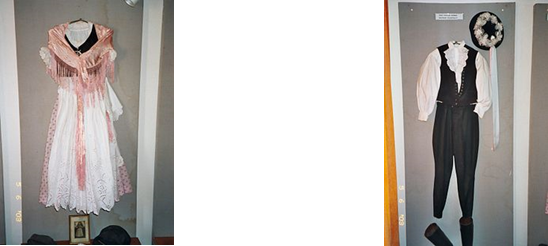
The Danube Swabian culture is a melting pot of southern German regional customs, with a large degree of Balkan and mostly Hungarian influence. This is especially true of the food, where paprika is heavily employed, which led to the German nickname for Danube Swabians as “Paprikadeutsche”. The architecture is neither Southern German nor Balkan but is unique to itself.
Language
The Danube Swabian language is only nominally Swabian (Schwowisch in the Bačka). In reality, it contains elements or many dialects of the original German settlers, mainly Swabian, Franconian, Bavarian, Rhinelandic/Pfälzisch, Alsatian, and Alemannic, as well as Austro-Hungarian administrative and military jargon. Loanwords from Hungarian, Serbian, or Romanianare are especially common regionally regarding cuisine and agriculture, but also regarding dress, politics, place names, and sports.
Many German words used by speakers of Danube Swabian dialects may sound archaic. To the ear of a Standard German speaker, the Danube Swabian dialect sounds like what it is: a mix of southwestern German dialects from the 18th century.
Popular names for women include: Anna, Barbara, Christina, Katharina, Magdalena, Maria, Sophia, Theresia, and many two-name combinations thereof. Popular names for men include: Adam, Anton, Christian, Friedrich, Georg, Gottfried, Heinrich, Jakob, Johann, Konrad, Ludwig, Mathias, Nikolaus, Peter, Philipp (or Filipp), and Stefan (or Stephan). With so few names in villages, other modifiers or nicknames were almost always used to distinguish people.
We’ll rejoin this region later in the family story when we learn about mom’s second cousin, Anton Letang, and what happened leading up to and during World War II.
Recent Comments