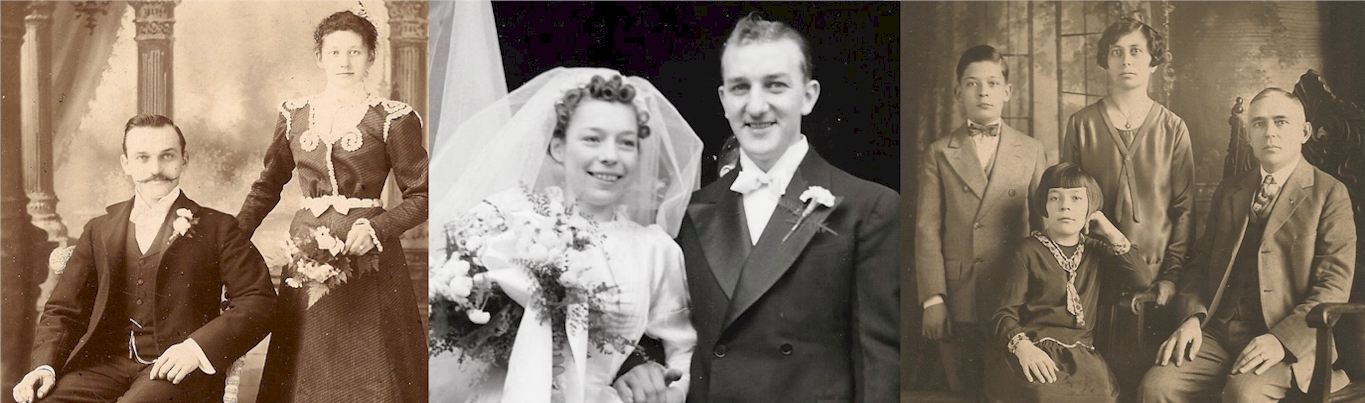
Franz Kahles Comes to America
In one of the chapters of Marian Lang’s Family Chronicles, my mother writes about her mother, Anna Quint, coming to America through Ellis Island. Her future husband, Franz Kahles, also came through Ellis Island. Both came in “steerage”, not an easy ocean voyage during those days.
We have no first-hand accounts from either Franz (Frank) Kahles or Anna Quint concerning their journey across the ocean. Since both came through Ellis Island in New York, we know that both travelled in steerage class. Accounts of travel at the time indicate that “only steerage passengers were processed at Ellis Island. First and second-class passengers were quickly and courteously “inspected” onboard the ship before being transferred to New York.”
Documentation also indicates that for most, crossing the ocean in steerage was a nightmare, a nightmare of crowded, unsanitary conditions and a 10 percent mortality rate. As late as 1911, in a report to President William H. Taft, the United States Immigration Commission said:
“The open deck space reserved for steerage passengers is usually very limited, and situated in the worst part of the ship, subject to the most violent motion, to the dirt from the stacks and the odors from the hold and galleys… the only provisions for eating are frequently shelves or benches along the sides or in the passages of sleeping compartments. Dining rooms are rare and, if found, are often shared with berths installed along the walls. Toilets and washrooms are completely inadequate; saltwater only is available.
“The ventilation is almost always inadequate, and the air soon becomes foul. The unattended vomit of the seasick, the odors of not too clean bodies, the reek of food and the awful stench of the nearby toilet rooms make the atmosphere of the steerage such that it is a marvel that human flesh can endure it… Most immigrants lie in their berths for most of the voyage, in a stupor caused by the foul air. The food often repels them… It is almost impossible to keep personally clean. All of these conditions are naturally aggravated by the crowding.”
Our ancestors survived the harsh conditions and, if their experience was like many, they heard plenty of rumors about life in America, stories of rejections at Ellis Island, and went through rehearsals for answering immigration inspectors’ questions.
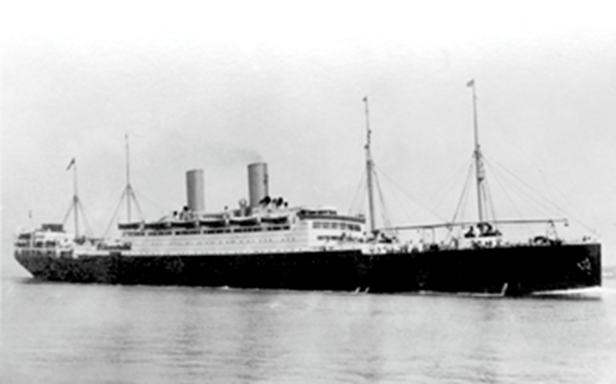
Grandpa Kahles arrived at Ellis Island aboard the SS Cincinnati, pictured above, on June 1st, 1911. He was 24 years old and, while the ship had sailed from Hamburg, he had spent the past six years as a barber in London. The voyage to New York and subsequent journey to Chicago turned out to be his final fling as true wanderlust. Growing up in Sellesch, now Nakovo, a small, rural town in the Austrian-Hungarian Empire (that region is now part of Serbia), he was sent off to Vienna at age 12 to learn to be a barber. His cousin Frank Schwatje had done that as well, and it was a number of years before the young boys would learn to cut hair. They started out running errands, cleaning floors and cleaning toilets. But both became barbers eventually and started to wander. Their travels took them to Switzerland, Paris, and then Belgium. In Switzerland, Grandpa liked to go tobogganing on days off but stopped that practice after realizing that, if he injured his hands, he would have no way of making a living.
Mom believes it was in Belgium that the wandering cousins decided their next adventure with a coin toss. One side of the coin and both would go to China (we have wondered if they knew how the Chinese like their hair to be cut). Well, it wasn’t China. Cousin Frank went to America and settled in Chicago. Grandpa went to London, cut hair, and learned English. In fact, he learned English so well that he spoke it without a German accent. When he was about to come to America, he met someone in Trafalgar Square in London who told him, “Oh, if you are going to America, you should not pronounce your name “Kahles” (with a short “a”-Kaahles), but “Kahles” (with a long “a”- Kayless). So ever after, he did. And that is the origin of our Americanized vs. German pronunciation of Kahles as we knew it in our and our parents’ generation. With his cousin in Chicago, it was inevitable that Grandpa would settle there where he would meet and marry Anna Quint, my Grandma, who came from Bocar, a small village less than 30 km from Nakovo.
Frank Schwatje established a barber shop on Addison Ave. in Chicago, but Grandpa never worked for him. Frank and his wife Lissie (known to mom as Lissie Tante) had three kids, Rosie, Elizabeth, and Mary Jane. Uncle John stood up for the first two at their weddings. Lissie was described as a compulsive housekeeper and shopper, confirmed after her death when they found six trunks of linens in the basement, all unused.
Recent Comments