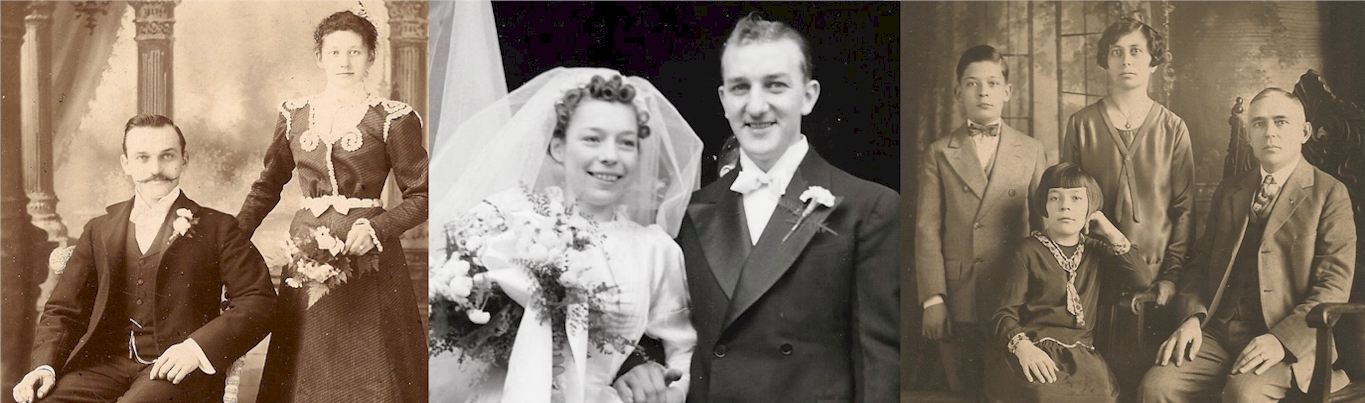
Hon and Babe – The George and Marian Lang Story
INTRODUCTION
Is there such a thing as a perfect marriage? Many would say no, but I beg to differ. My dad and mom, George and Marian Lang, had as perfect a marriage as I can imagine. Coming from humble beginnings, born and raised in Chicago, they were nearly inseparable during their 44 years of marriage. We lost dad far too early, dying in December 1983, at age 68. Mom lived another 35+ years, always lighting a candle for dad. She passed away at the end of February 2019 at age 101 and now rests next to him in All Saints Cemetery in Des Plains, Illinois. The two are joined again with gravestones simply marked HON and BABE, the tender way they always referred to each other. This is their story from Origins onward, told in chapters as I find time to write it, occasionally sprinkling in a few digital teardrops.
CHAPTER ONE: Origins
Marian Lang was the second of two children of Franz and Anna Kahles. Her father, Franz, who later went by Frank in the United States, was born in a small town called Nakovo in Austria-Hungary in 1887. That area today is part of Serbia near the town of Kikinda. When young Franz was 12 years old, he was sent off to Vienna to learn to be a barber. His cousin Frank Schwatje had done that as well, and it was a number of years before the young boys would learn to cut hair. They started out running errands, and cleaning floors and toilets. But both became barbers eventually and started to wander. Their travels took them to Switzerland, Paris, and then Belgium. When cousin Frank went to America, Franz Kahles went to London and stayed for six years, cutting hair and becoming proficient in English. He traveled to America in 1911 and joined cousin Frank in Chicago1.
Marian’s mother, Anna Quint, also came from Austria-Hungary. She was born in 1883 in a small village called Bocar, only 30 kilometers from Nakovo where her future husband came from. She left at age 16 and sailed to America, coming through Ellis Island like so many others during the great migration of the time. Anna kept house and cooked for a couple in Philadelphia for a while but later made her way to Chicago to join her sister Marta. It seemed inevitable that Franz, now Frank, and Anna would meet in the German speaking community in Chicago. They did and got married in May 1913.
George Lang was the last of the six children of John Nicholas Lang and Kreszentia Breuss. His father was born in 1873 in Döbrastocken, just outside the small village of Döbra in the upper part of Bavaria, Germany. We have no information yet on when Nick, as he was called in the United States, immigrated to America. We do know that his sister Wilhelmina came to America as well. Leslie and I visited Döbra several times and observed numerous headstones of Langs and a plaque on the wall of the church with the names of Langs from Döbrastocken who died in World War II.
His mother was born in 1871 in or near Feldkirch Austria. Kreszentia came to America with her father Johann Breuss, brother Johann, and sister Rosa. You can read about the Breuss clan in other posts on this site, and I will include links in future updates. Here’s the short story. The family made their way to Philadelphia where Rosa met John Waldis of Roanoke, VA. Mr. Waldis, whose wife had died, was visiting his son before heading back to Switzerland to find another wife. At a gathering of German friends, he saw Rosa coming down the stairs and told his son that he didn’t need to go to Switzerland, he would marry that girl. And he did. While the elder Johann Breuss went with Rosa and John Waldis to Roanoke, the younger Johann, now John, went to Colorado where he established a ranch2. Kreszentia, not wanting to intrude on the newlyweds, made her way to Chicago to join her cousins who had come earlier.
John Nicholas Lang and Kreszentia Breuss were married in 1900, lived in Chicago mostly, but also lived for several years in Aurora, Illinois. Nicholas worked in a foundry at the William Deering Works of International Harvester, located at Diversey and Clybourne. In fact, the Lang family house at 3031 Hamilton Avenue was moved to that location to accommodate an expansion of the plant. Most of the six children were physically born in that house. George was born on April 11, 1915.
CHAPTER TWO: Early Years
John Frank Kahles was born to Frank and Anna in September 1914. Sometime thereafter, with circumstances now muddied by time, Frank Kahles was suffering from what we would now call a nervous breakdown, or something close. In any case, he was advised to leave Chicago, seek the open air, possibly go up to Minnesota and work outdoors. He took that advice and moved his young family to Renville, Minnesota where German immigrants were working on the farms, mainly picking potatoes. Frank joined them and essentially recovered. He would take his family back to Chicago, but it was during that time in Renville that Marian was born on December 6, 1917. She was delivered by an itinerant doctor passing through the territory. When the doctor asked the name of the child, he was told they didn’t have a name yet. A woman helping young Anna asked the same a bit later and was told the baby would be named Maria Anna. The woman told Anna that was too hard. Call her Marian. And so it was. She was Marian, no middle initial, on every document in her life. Which worked until early in 1982 when she tried to get a passport to come to Germany to see her Air Force son Richard, her daughter-in-law Leslie, and her two grandchildren, Douglas and Janice. When she ordered a copy of her birth certificate from Minnesota, her name came back as “Female.” She needed affidavits to prove she really was Marian.
George E. Lang Sr. was special from the start. To the best of our knowledge, he was the only one of the six Lang children who was not physically born in the family home at 3031 Hamilton Avenue in Chicago. There wasn’t a lot of room with six children in a small house. George slept in the attic with his older brother Harold. Very much like the name mix-up of his future wife Marian, George always believed his name was George Edward. What he didn’t know until much later (yes, trying to get a passport in 1982) was that he really wasn’t George Edward. He was Edward George. His godfather, George Horvath, declared that if this was his godson, then his name was George. Yes, affidavits to prove he really was the same guy.
George and Marian probably didn’t know each other in their very early years, but they grew up in the same German speaking neighborhood of Chicago, only about six city blocks apart. Both went to the Schneider Elementary School which closed in 2013. The school was named after George Schneider, a German American journalist and banker who served as editor-in-chief of the Illinois Staats-Zeitung (state newspaper). His newspaper was one of the first to oppose the expansion of slavery in the western territories in 1854 which helped shape the attitudes of the German population toward loyal support of the Union during the civil war. Mr. Schneider was appointed by President Abraham Lincoln as the United States Consul in Denmark at the outbreak of the civil war and later served as Collector of Internal Revenue for the 1st District of Illinois. Growing up in Chicago in the 1940s and 1950s, our family went to both of my grandmother’s houses every Sunday. Occasionally, we would go a few blocks out of the way to drive past the Schneider School whereupon both parents, George and Marian, would burst into song, singing in part:
“Ring out, sing out, cheer for the Schneider; Let voice and drum echo afar; We hail thee, George Schneider; Thou art our guiding star”
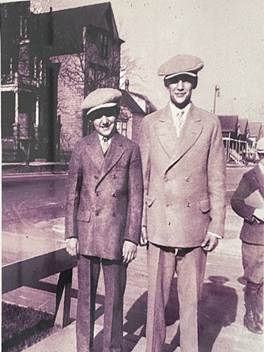
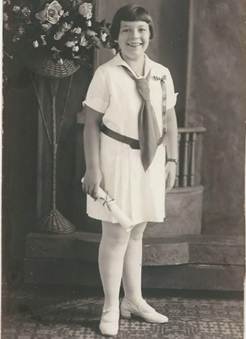
Here are photos of George (with older brother Harold) and Marian when they were children:
As noted elsewhere on this blog, Frank and Anna took their young family back to the “old country”, then part of Yugoslavia, in 1926 to visit their parents and other relatives. The timing was intentional. Their son John was 11 and if they waited any longer, they would have to pay full fare for his travel. Marian was eight years old and always told the story of their ocean crossing, hanging out of the open portals to see the sharks. One little girl on the ship was too small to look out over the portal, so they lifted her up, put her head out, and held her by her legs and feet. Even into her old age, Marian cringed at the thought. On that visit, John and Marian played with their second cousin, Anton Letang, who lived across the street from their Grandma Quint’s house. You can read about Mr. Letang elsewhere on this blog. In time, I will add a link.
The Kahles family returned to Chicago after a four month stay. On way home, Marian begged her mother Anna to buy her a doll. It seems Anna did buy her a doll, but not the exact one she wanted. It turns out though, the doll she received is lovely. Here’s a photo of that doll which has recently been restored.
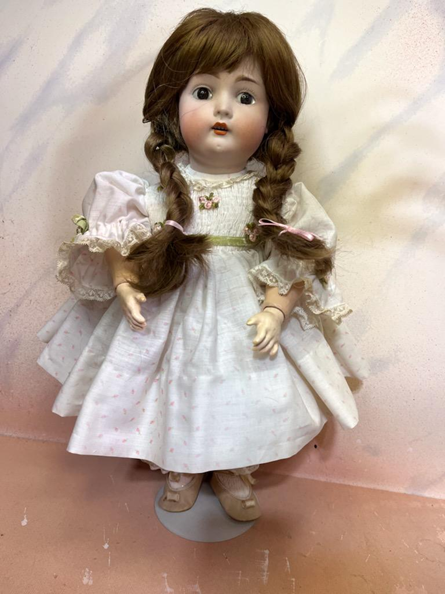
Marian’s Doll from Europe
The young Kahles family boarded the SS Stuttgart in Bremen, Germany for the voyage home. On that journey, Frank and Anna met Elsa, a fellow traveler. Here’s a photo of Elsa with the Kahles family.
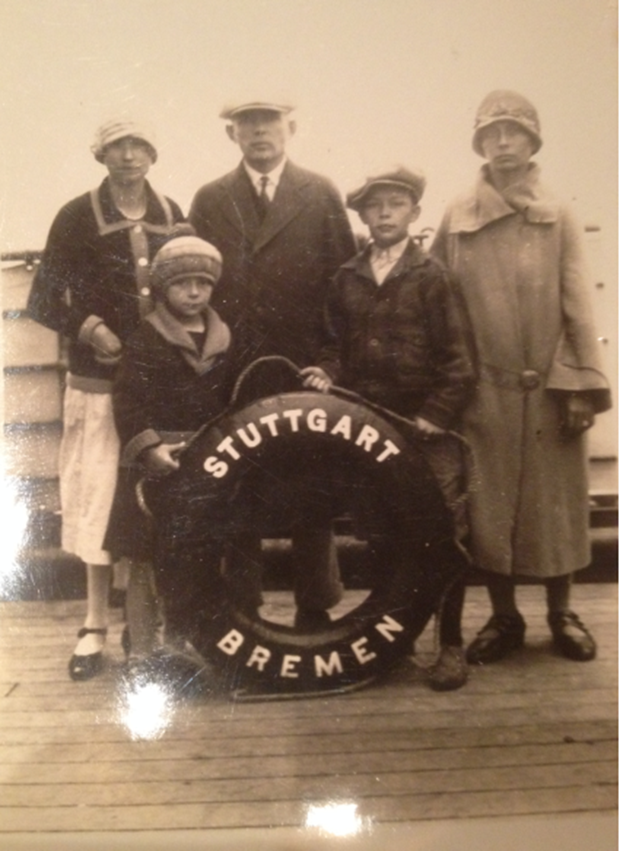
When reflecting on the events of 1926, Marian often said she returned to the United States speaking English with a German accent.
George meanwhile continued to be special. While the first five Lang children got jobs and started working immediately after graduating from grammar school, George went on to high school. Marian always told the story of the grammar school principal visiting the Lang house to tell George’s mother, Kreszentia, that George was smart and that she should let him go to high school. He did so and graduated from Lane Technical High School which is still there today. George worked during these years including a job at Riverview Park, a large amusement park in Chicago, which was one of our favorites destinations as kids. Riverview is gone now, but many great memories remain. With his technical background from high school, George soon got a job in the machining industry, working for Illinois Testing Laboratories (ITL) which began operation in 1919 in Chicago as a repair and service center for precision instrumentation. He didn’t know it then, but this job at ITL, which would later become Alnor Instrument Company, was the steppingstone that defined the rest of his life.
Marian, of course, graduated early from grammar school and went on to Lake View High School. A smart, young girl with good study habits, she graduated in June 1934 at age 16. From there, she went to Wright Junior Collage for two years and, among other knowledge and skills, became an excellent typist. She got a job with a company called Chicago Printed String Company which made ribbons and other tying materials for decorative and industrial use.
CHAPTER THREE: Love and Marriage
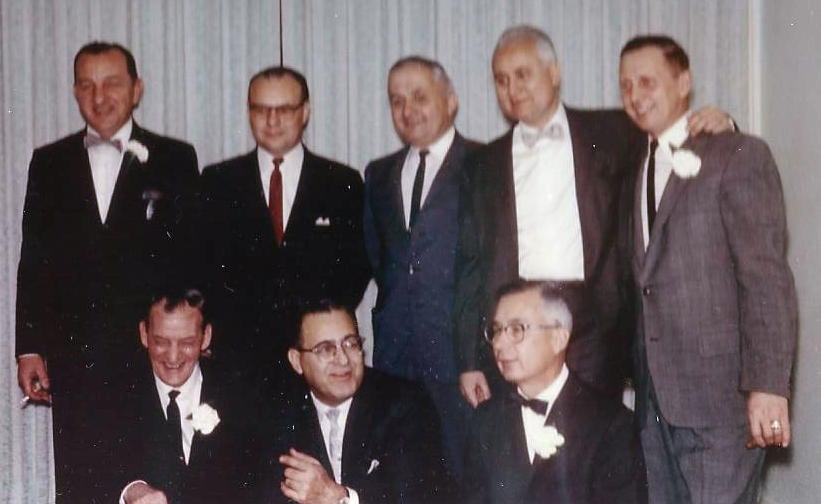
Piecing together multiple backgrounds, we can be reasonably sure of how George and Marian first met. Going to the same grammar school and living within the vibrant German community in the Lakeview area on the north side of the Chicago, they’re meeting was inevitable. George and Marian’s brother John were close in age and went to the same high school, Lane Tech. We know that each of them formed life-long friendships in those early years, Marian with the other young women from Chicago Printed String and George with a group of guys that called itself The Silhouettes. Marian was very close to some of the Silhouettes: her brother John, John’s friend Fred Phillips, and her nearby neighbor Bill Gruetzmacher. Other members were George, his brother Harold, Hank Ritter, and Ed Rauch. You can view photos of the Chicago Printed String women and the Silhouettes in their later years on the George and Marian Lang Gallery on this history site.
So, to Marian, it seemed like George was “always around” like so many of the other kids and her brother’s friends in the neighborhood. At first, she didn’t think of him in romantic terms, he was just George. Then not long before they were dating, George started coming to her house to read the newspaper. Marian’s parents began to suspect it wasn’t just the newspaper in which he was interested. Marian had blossomed into quite a looker, was always fun to be with, and was smart and levelheaded. George had recently broken up with his rather serious girlfriend who made the mistake of bragging that she had shortchanged someone who had overpaid. George broke up with her immediately and wouldn’t take her back. So, his attention turned fully to Marian. When she accompanied someone’s cousin from out of town to an event, George showed up the night of the date and went with them! He didn’t want them to be alone together. They started dating soon after, and the rest is history.
The wedding took place on Thanksgiving Day of 1939 at St. Alphonsus Roman Catholic Church in Chicago. This was after Marian converted to Catholicism and was baptized. She remained a devout Catholic for the rest of her life.
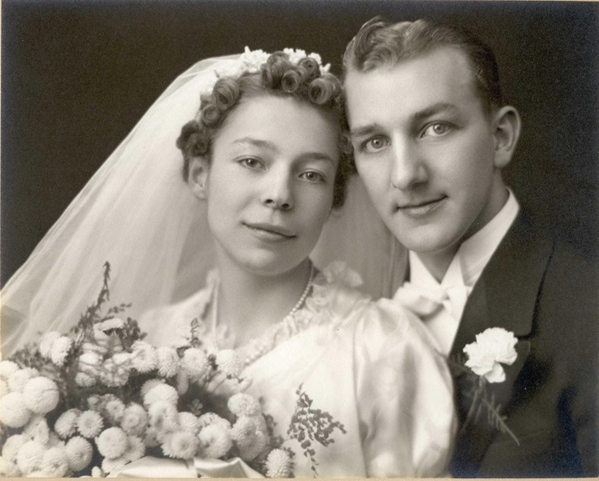
George and Marian Wedding Day
Their first apartment was on Belmont Avenue in Chicago across the street and not far from Marian’s parents’ place. This was a couple clearly in love and clearly having fun.
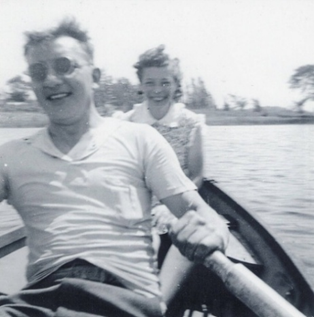
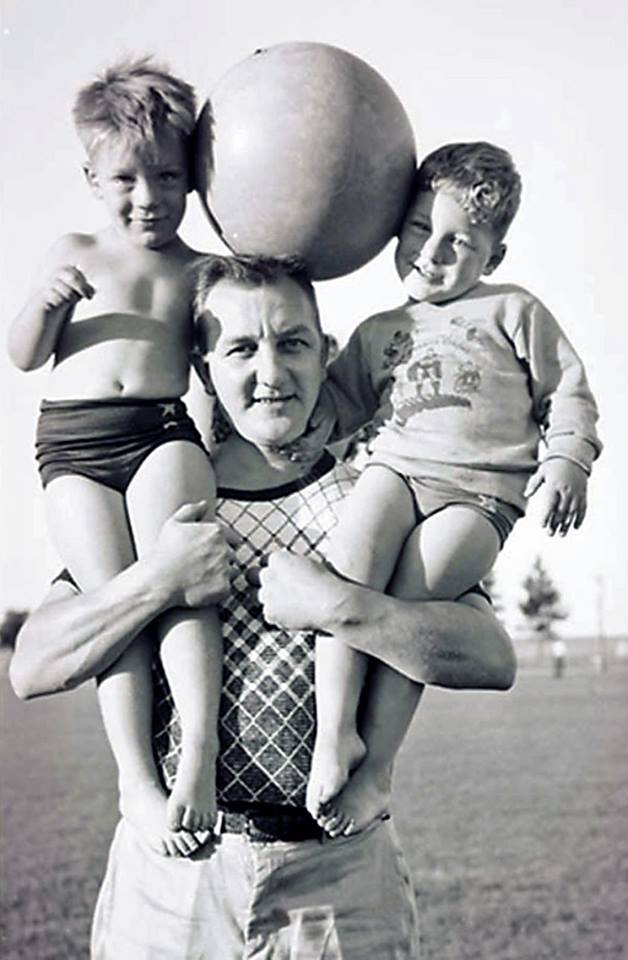
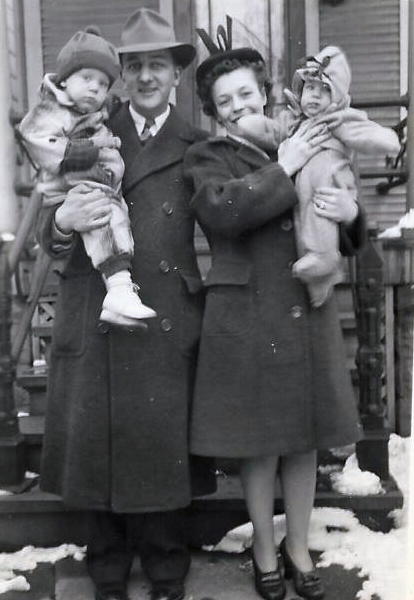
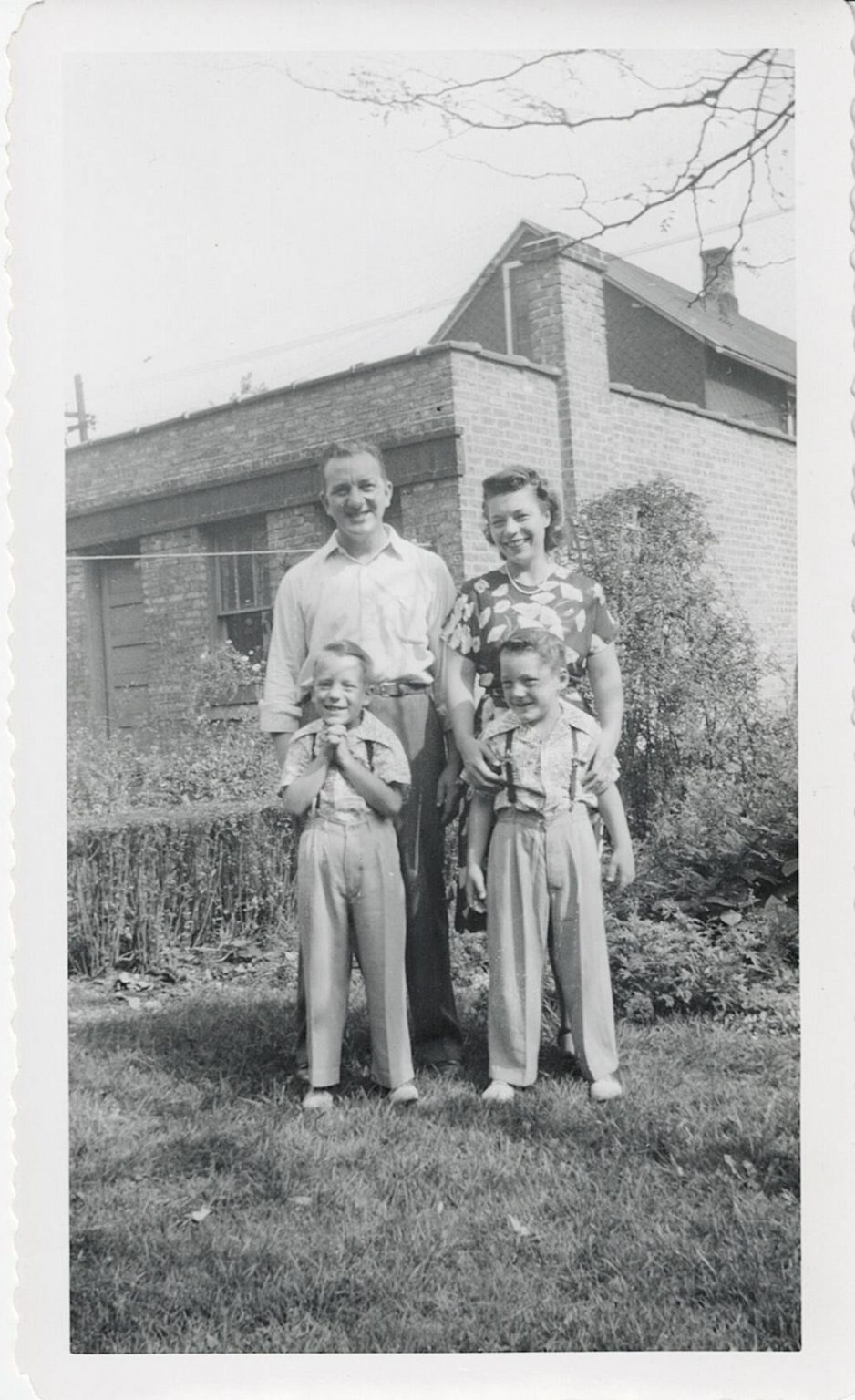
But life soon turned much more serious in the wake of the Japanese attack at Pearl Harber on December 7, 1941. It wasn’t long until George received his draft notice. Luckily, his company had government contracts including making gauges for the U.S. Navy. A representative from the company went to his draft board and told them they couldn’t carry out those contracts without people like George. Lucky for the young couple of course and also lucky for George E. Lang Jr. and Richard F. Lang (that would be me) who were born in 1942 and 1943 respectively.
During those early war years, George became acquainted with a wonderful and talented coworker named George Carson. At the time, Illinois Testing Laboratories (ITL) was outsourcing its supply of specifically designed, machine-made piece parts, parts made on automatic screw machines. The bosses decided to bring that process in house and bought several screw machines. No one knew how to set them up to make piece parts, so they assigned George Carson, a great machinist, to learn, teach and make it work. And he did.
In 1943, George and Marian bought the house at 2712 N. Oak Park Ave., further west in the city. When the two Georges saw the opportunity to use their newfound knowledge to make some money on the side, they bought some machinery and installed most of it in that house. As little kids, George Jr. and Richard lived with two automatic screw machines in the basement, singing them to sleep every night. They also lived with a drill press in the kitchen. Newly married Helen Carson lived with a bench lathe in her bedroom. Their venture was a success as they continued making piece parts for customers at night and on the weekends.
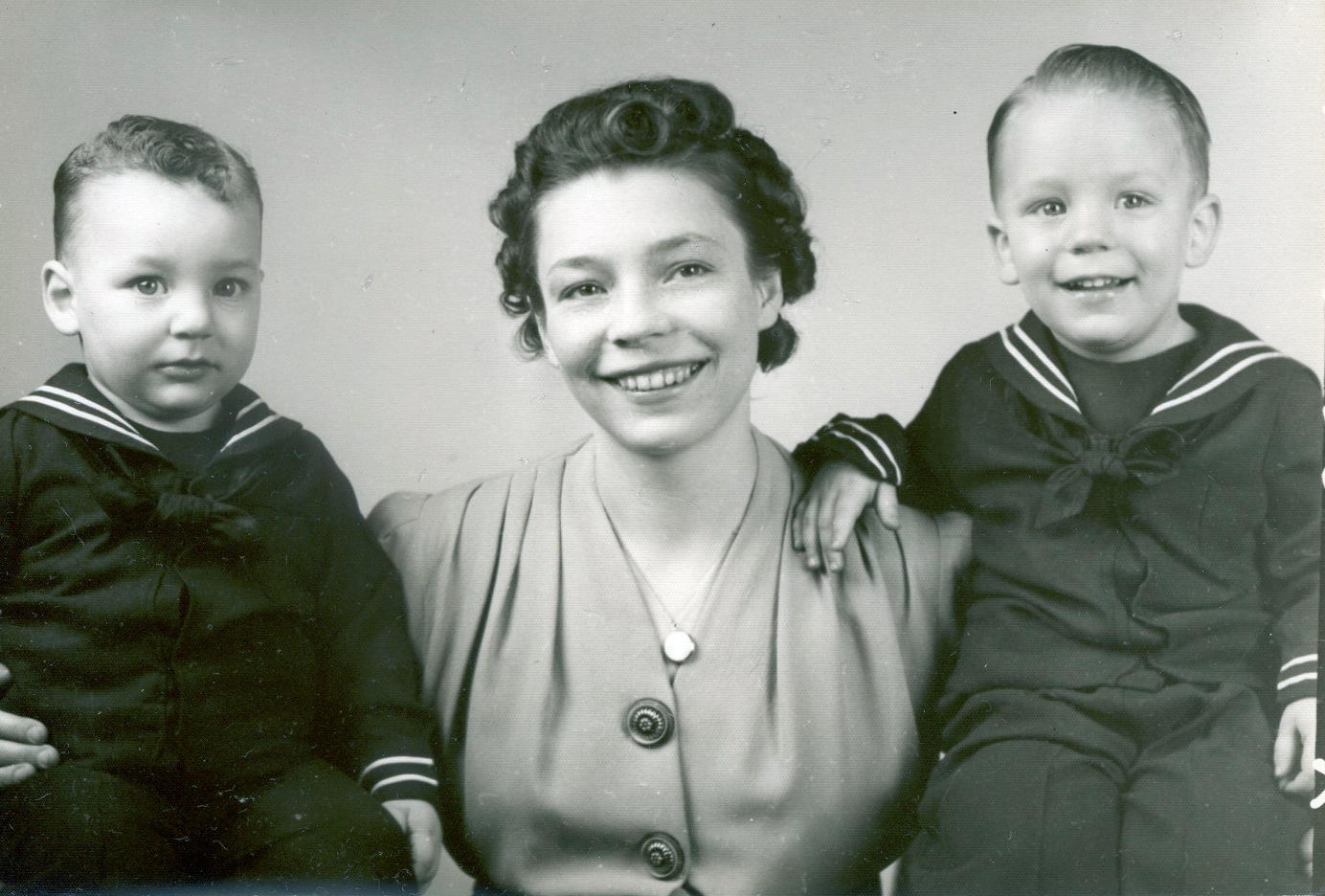
By the spring of 1945, the war on both fronts had turned in the allies’ favor. There was, however, another scary moment for George and Marian. George’s exemption had run out and he received another draft notice with a date to report for his physical. Marian wanted her husband to have a nice photo of her and the two boys, so her father, Frank Kahles, took the three of them to professional photographer. Fortunately, George never had to leave home.
This time, a rep from ITL was in Washington, DC. When he heard about the draft notice, he called George and told him he must NOT report for that physical, a prospect that had the couple frightened that he would be arrested. The rep, it turns out, was in the know. The war ended two days later.
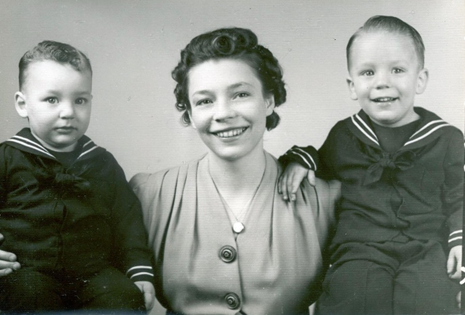
Marian with Sailors
The two Georges actually formed a company in 1944 and called it Georges’ Screw Products, later renamed Georges’ Screw Machine Products. After the war, they found it increasingly difficult to do both their day and night jobs, so, they broke away from ITL and rented a small shop in the city. When it proved too small and they could afford it, they bought the long-time home of the company in Franklin Park, Illinois. And, as it turned out, their relationship with ITL really didn’t go south. As ITL became ALNOR after the passing of the original owner, the company again outsourced the production of piece parts, this time to Georges’.
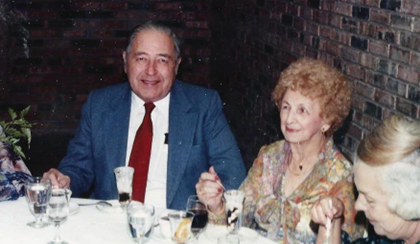
George and Helen Carson (years later)
George and Marian continued through the years as they started, deeply in love and inseparable. As George worked hard to make the business a success, he transitioned into a polished and outgoing businessman. This was a perfect fit for George Carson who was always more comfortable running the operations of the shop. With Marian contributing by keeping the books, the business now had sales, finance, and production. At home, George and Marian became well known in St. Williams Catholic Parish with Marian serving for a time as the President of the Catholic Women’s Club.
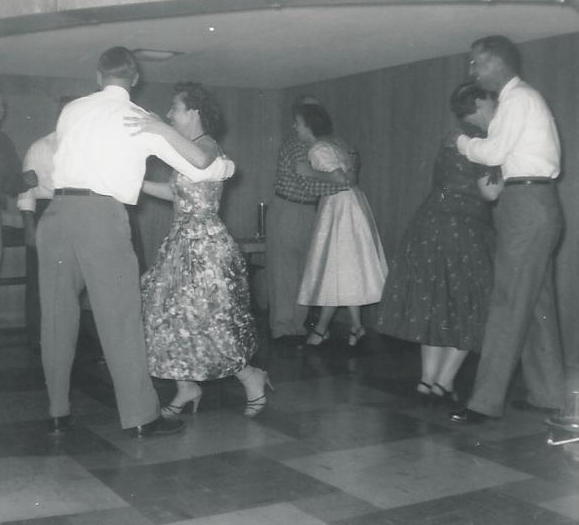
Along with their many friends, the couple enjoyed square dancing, and for a while, square dance parties were held monthly, rotating between houses.
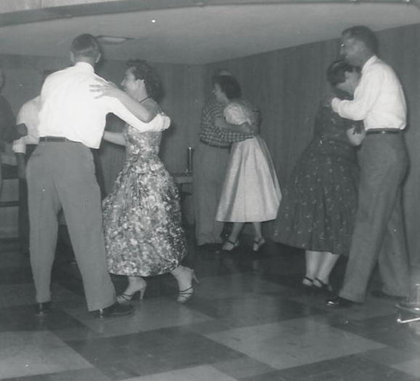
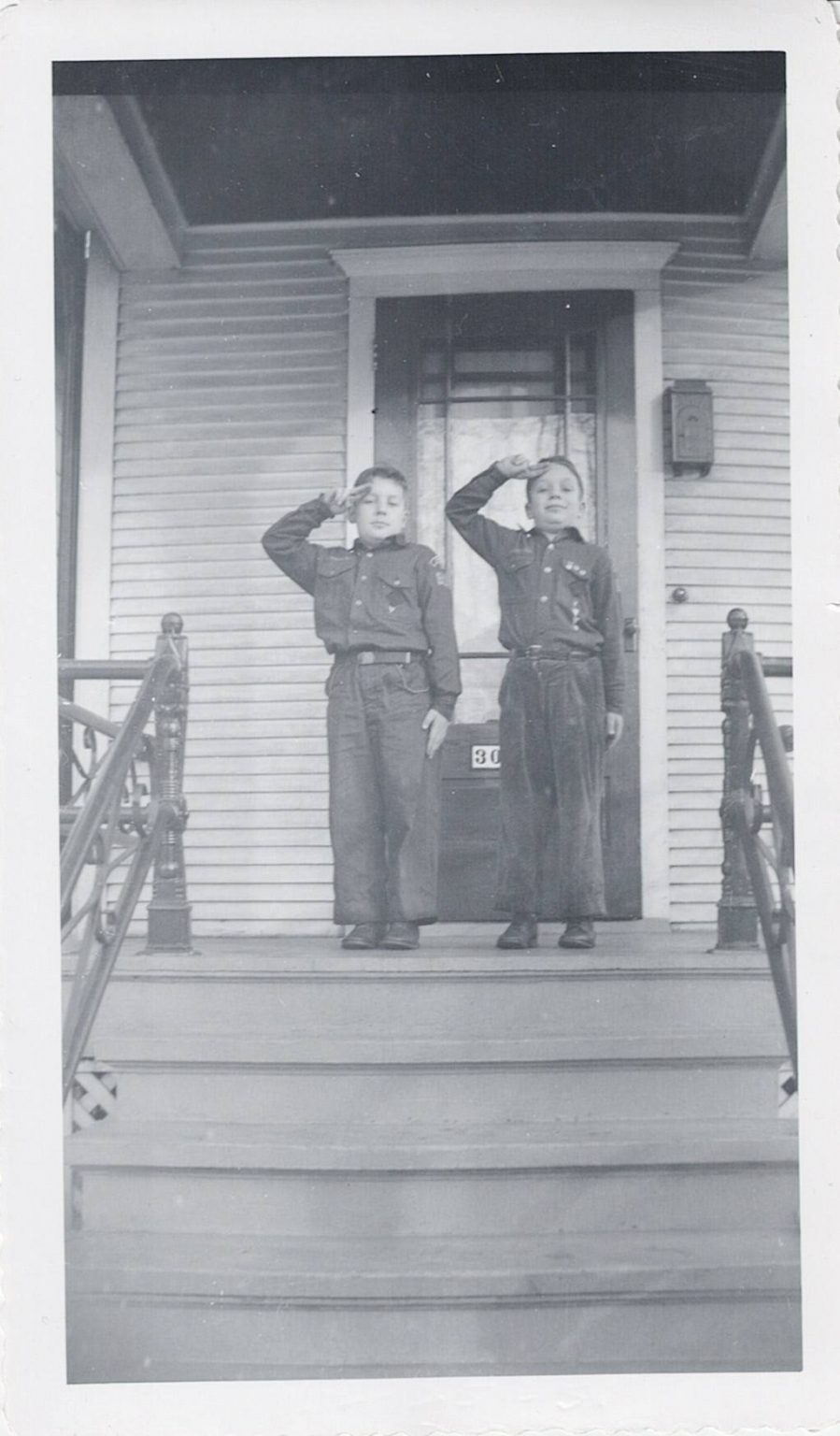
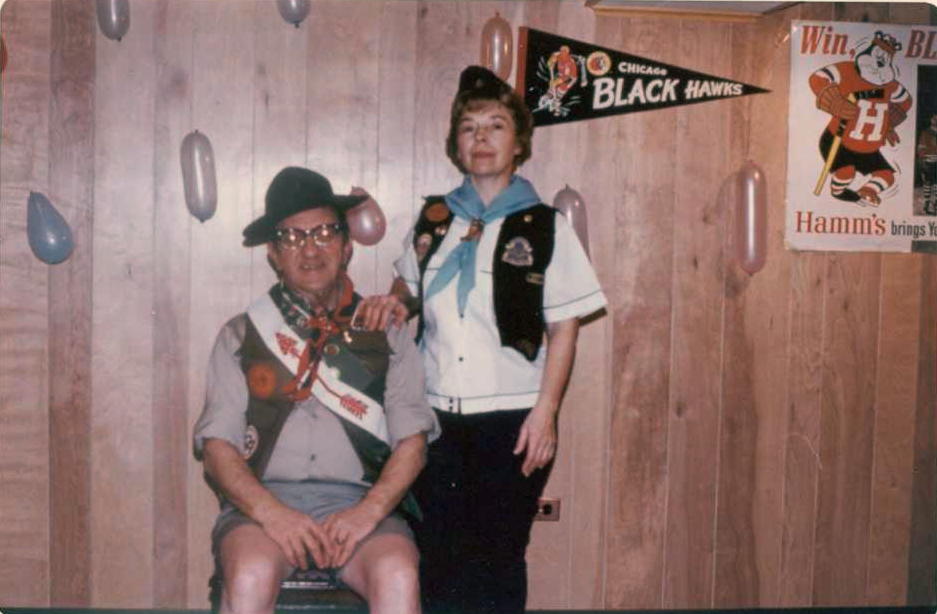
With two young boys, George and Marian enjoyed camping as a family and supported the parish scouting programs. Marian was the quintessential Den Mother and George assisted the scout master on nearly every outing.
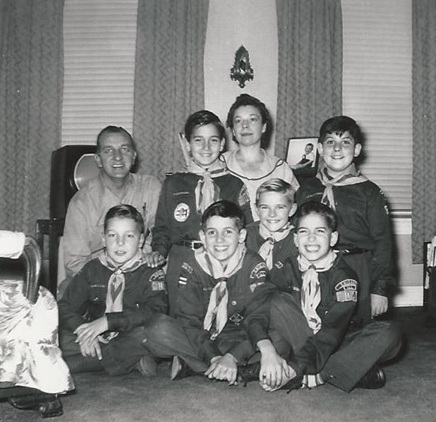
Blessed as they were, a great new blessing came their way (and our way) in June of 1955 as Marian gave birth to their third son, Gerald E. Lang. By 1963, now with two college students and an eight-year-old, George decided that a move to the suburbs was in order. So off the family went to a new house in a new subdivision in Niles, Illinois, just a few blocks from Our Lady of Ransom Catholic Church.
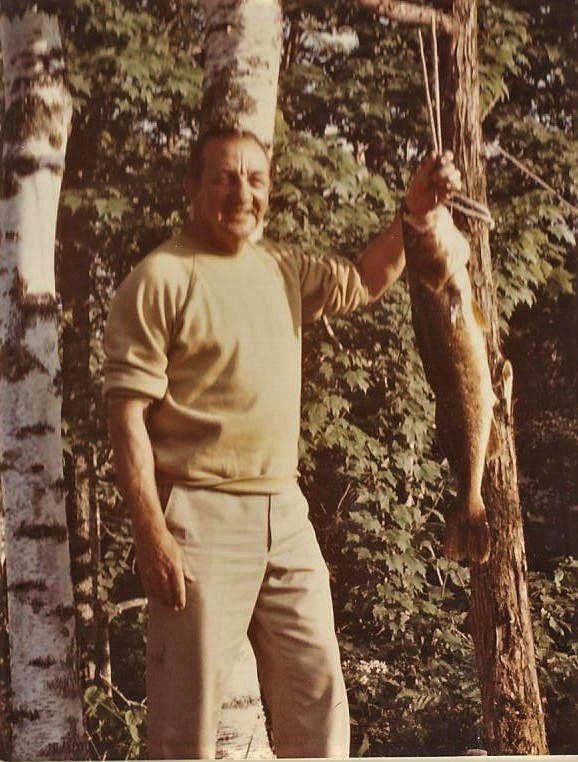
In the years that followed, Georges’ Screw Machine Products became well-established and continued to succeed. George became well known in the manufacturing community and rose to become the President of the Northwest Suburban Manufacturers Association. He and Marian enjoy boating with new friends, and they continued camping, now in an RV. With more time available, George also enjoyed fishing, especially with son Jerry.
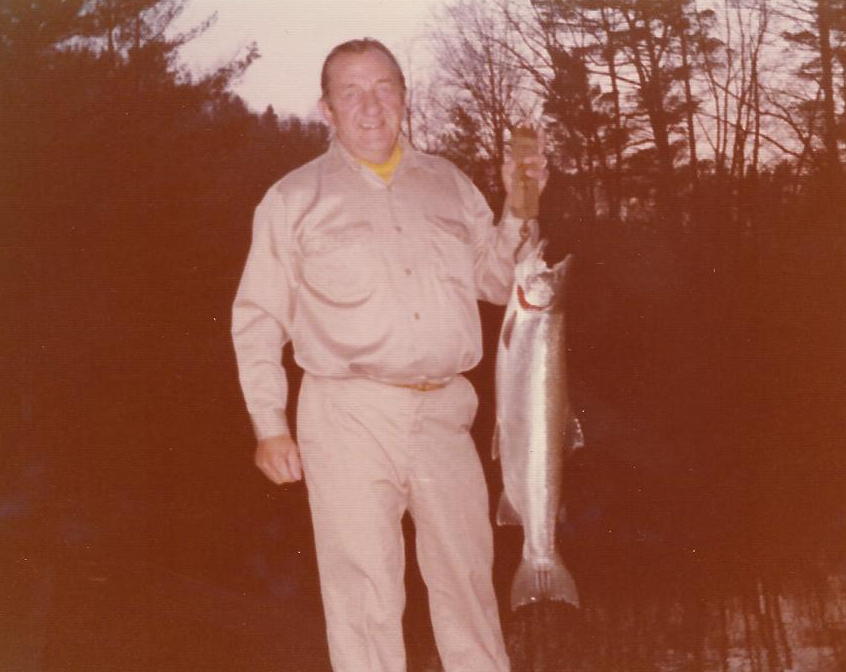
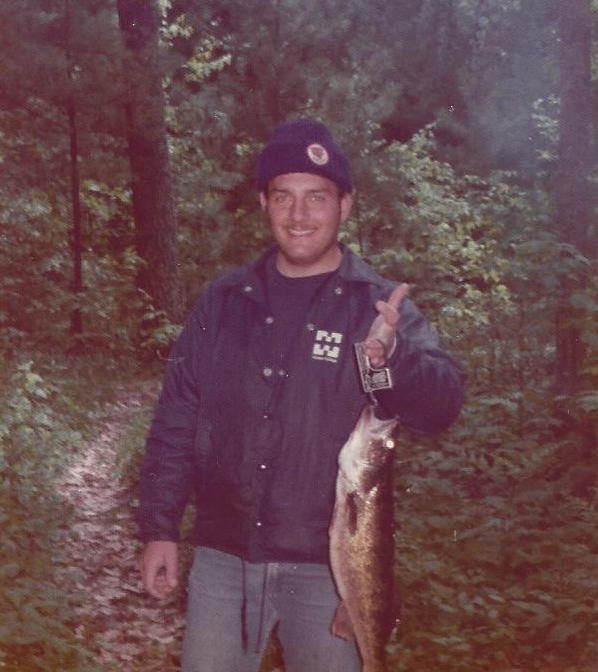
Son George Jr. (1942-2007) graduated from Loyola University in Chicago and went on to earn a PhD in Mathematics. He became the head of the Math Dept. at Fairfield University in Connecticut. He married Mary Beth Schnare and together they had two children, John Kenyon and Susan.
Son Richard (1943- ) graduated from Loyola University in Chicago with a degree in mathematics. He subsequently earned a master’s degree in business management and served 26 years in the US Air Force, retiring as a Colonel. He married Leslie Ann Dahlquist in 1966 and together they had two children, Douglas and Janice.
Son Gerald (1955- ) graduated from Western Illinois University, then worked at Georges’ until it was sold in later years. He married and divorced Marianne Cuddington (now deceased). They had three children, Sean, Drew, and Gina.
CHAPTER FOUR – LATER YEARS
George Passes Away
The opening page of this website provides the details of George and Marian’s visit to Wiesbaden Germany in May 1982. Several months later, I received a very disturbing call from my dad, George Lang. He said that doctors had found a spot on his lung. It turned out to be lung cancer, surely a result of his having smoked cigarettes since he was 11 years old. He was then 67. Despite radiation and chemotherapy, the disease progressed over the next year and a half, and he died on December 8, 1983.
Saying this was a tough year for Marian would be a total understatement. Not only were she and George inseparable since the late 1930s, but Marian lost her mother, Anna Kahles, earlier that year.
Just before he died, George told Marian to trade in the large RV they had been traveling in and buy something smaller that she could drive comfortably. This she did as you can see in the photo below.
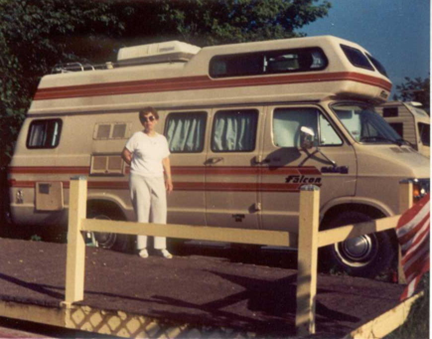
And RV camp she did, many times. The outings with old friends and her camping group were normally within 150 miles of Niles, Illinois where she continued to live for the rest of her life. Immediately after George died, she went to their safe deposit box and found an envelope with five One Hundred Dollar bills that said, “For Outside Expenses”. She never knew what he had in mind, but every so often, she’d pull it out to pay for something, having decided it was an “outside expense”.
Marian’s Last Few Months and Death
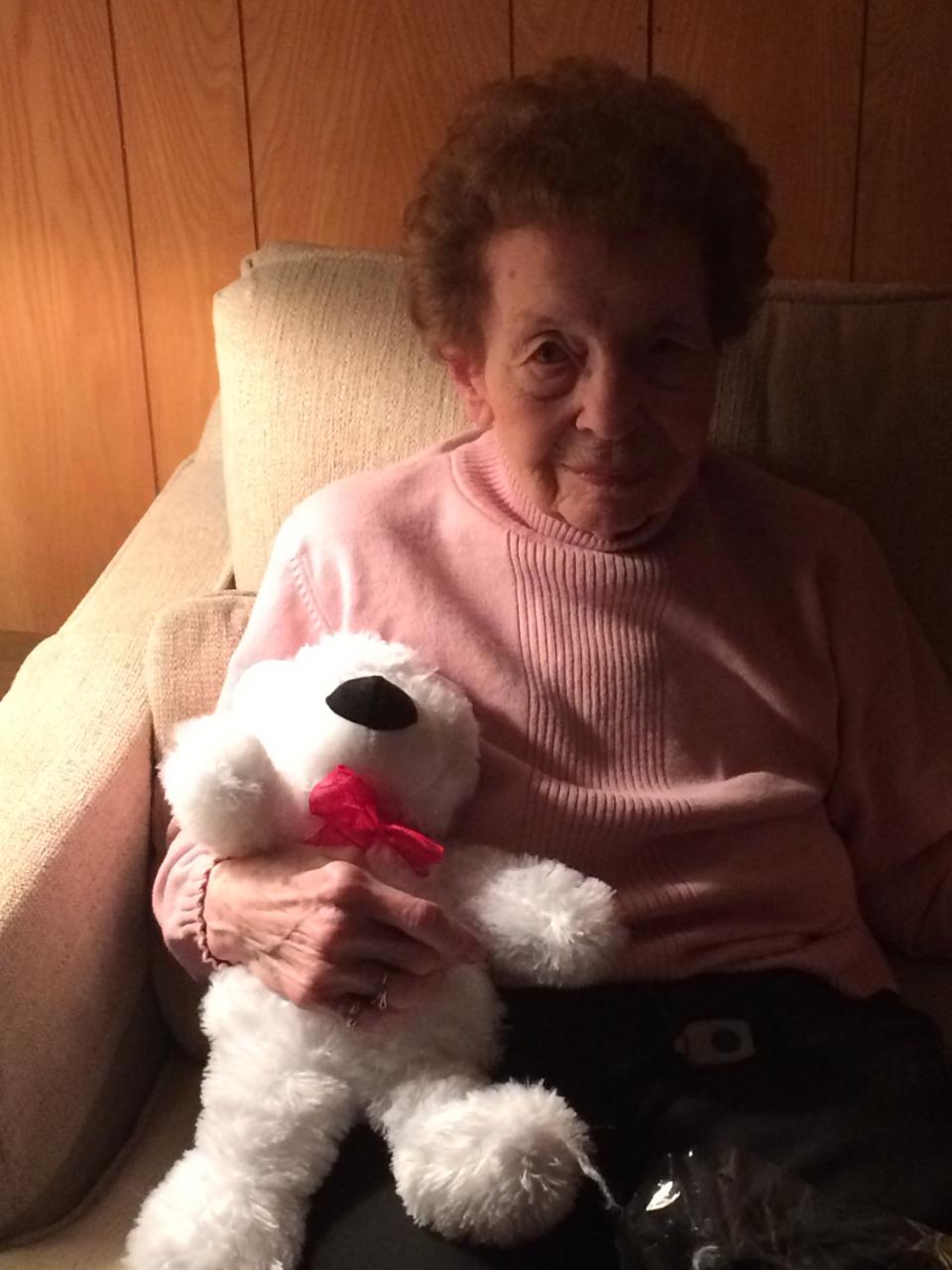
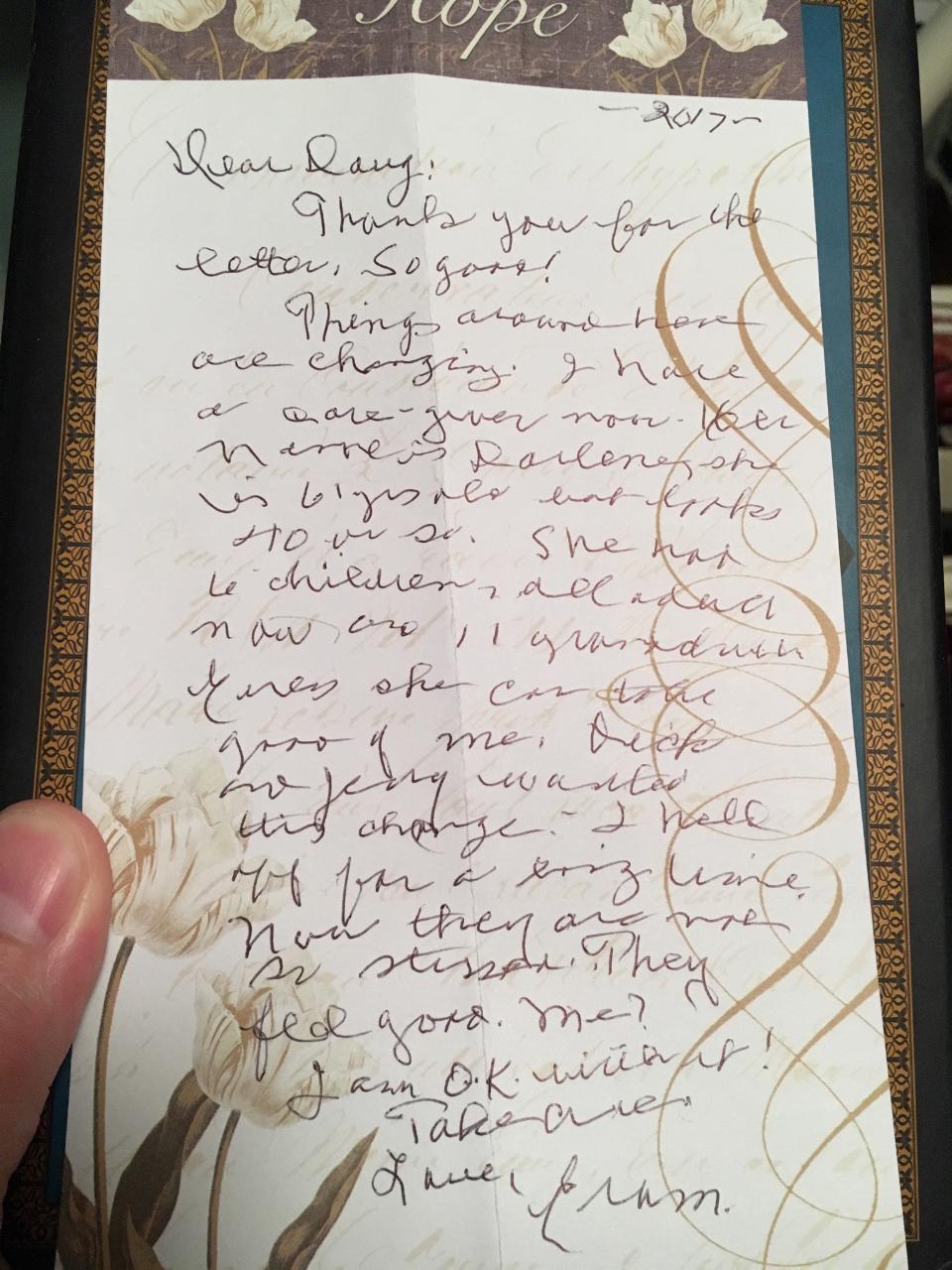
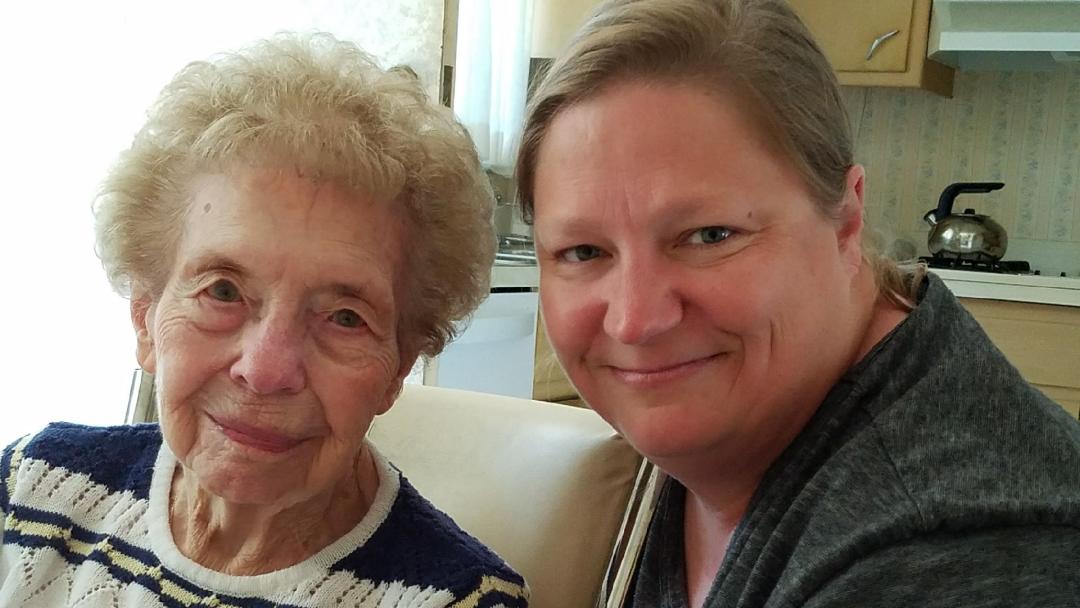
As her eighties turned to her nineties, Marian still enjoyed visiting with friends and family and playing PoKeNo, but walking became more and more difficult as she lost strength in her lower legs. Understanding her strong desire to stay in her own house rather than moving to a care facility, the family found a wonderful woman named Darlene to live with her.
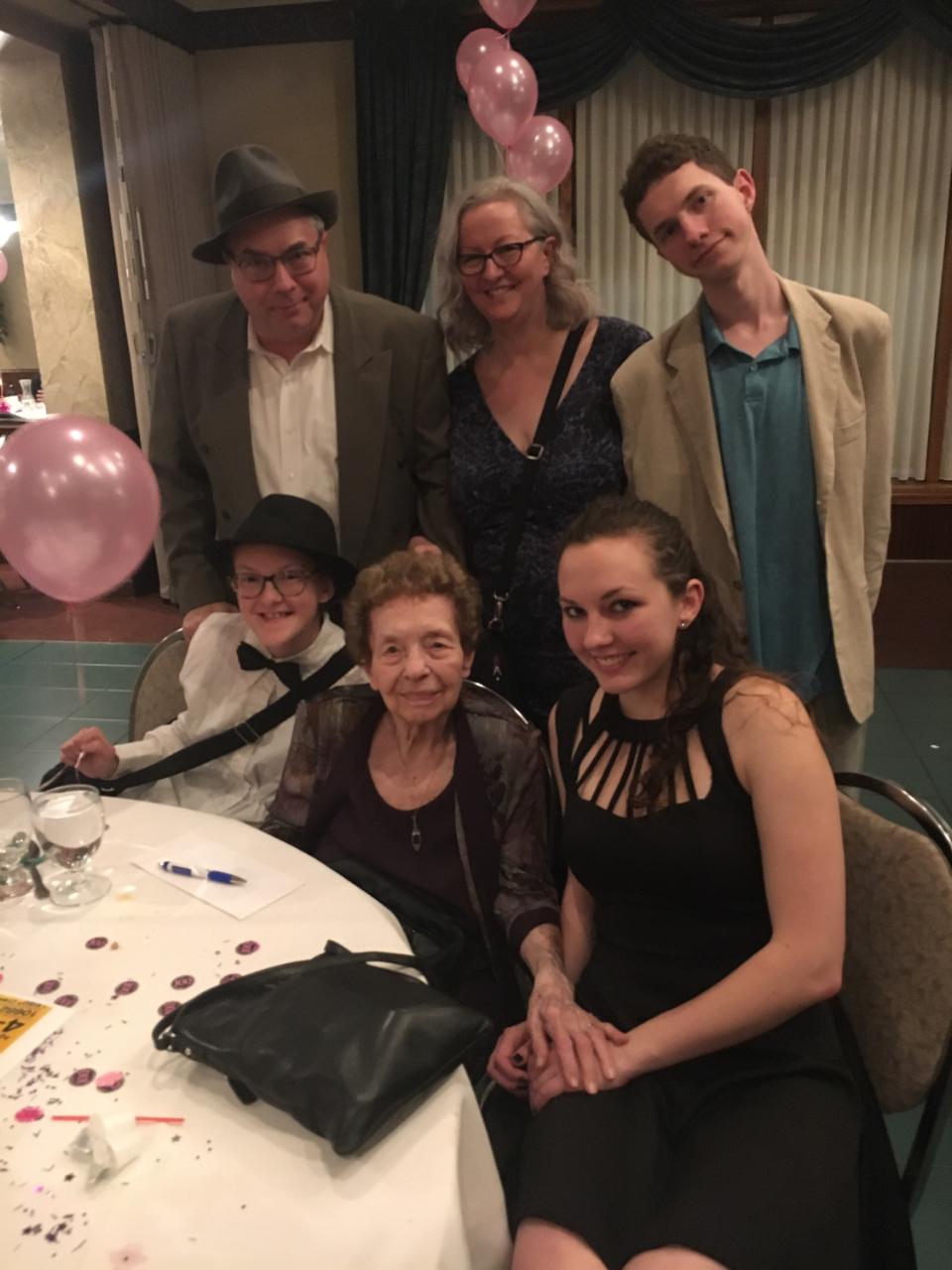
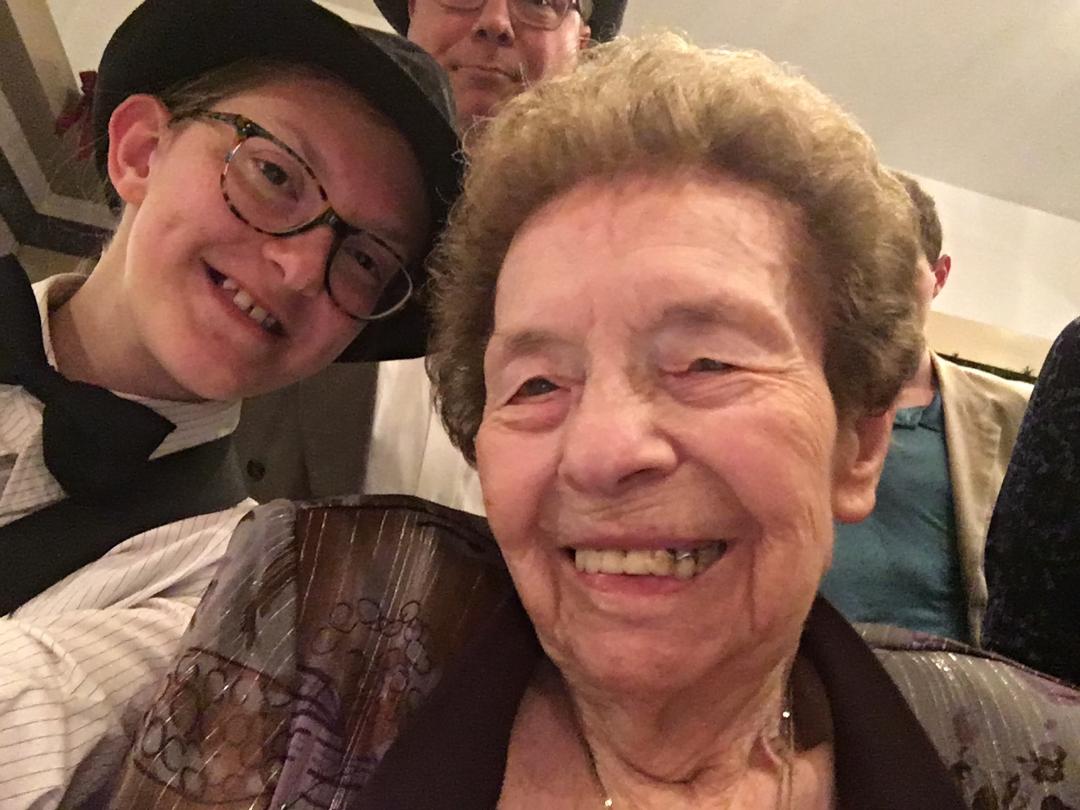
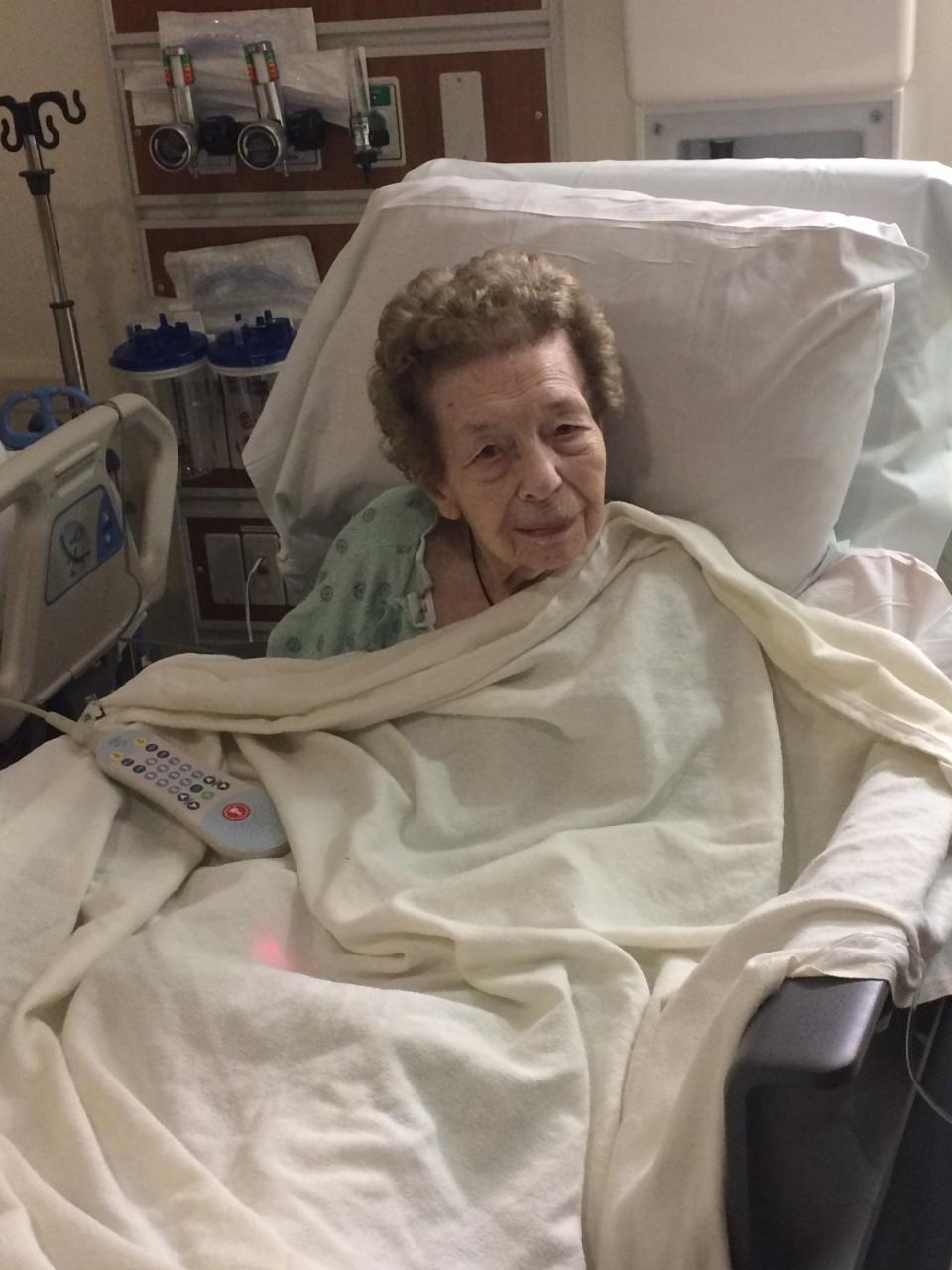
Marian turned 101 on December 6, 2018. We had a party, of course, something we’d been doing since she was 95. The event at Judy and Jerry’s house was well attended, with Jake’s poem a major hit. Just before Christmas of that year however, Darlene found mom in the family room around 0300, unable to move much or talk. A call to 911 got mom to the hospital, where doctors found she had suffered a stroke. With our authorization, they operated and mechanically dislodged the stroke-causing blood clot. Miraculously, mom was home and eating and talking by dinner time. As a result of the stroke though, she became even less mobile and lived, with Darlene’s help, in her family room.
Marian suffered a massive stroke on February 20, 2019. This time, there was nothing the doctors could do for her. Acting on the recommendation of a palliative nurse, she was brought home and put in a hospital bed. With visits from various family members and regular visits from the hospice staff, mom lived until 2:10 pm on February 28th. In the presence of myself, Darlene, and the hospice nurse, mom opened her eyes very wide for about 10 seconds, then died.
We had a one-night wake at Skaja Terrace Funeral Home in Niles, Illinois on March 3rd and a funeral mass the next day at Our Lady of Ransom Catholic Church. She is buried next to dad at All Saints Cemetery in Des Plaines, Illinois. The headstones? “HON” and “BABE” as they always called each other. No birth or death years are engraved on those stones – guess they’re both timeless.
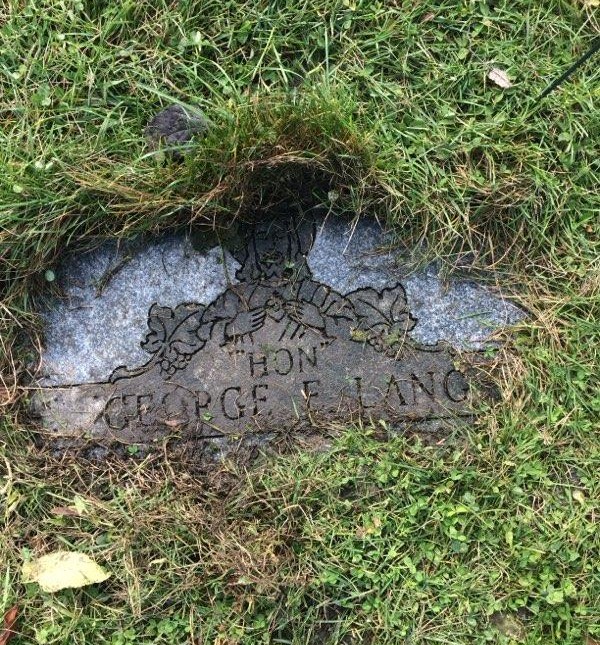
Hon
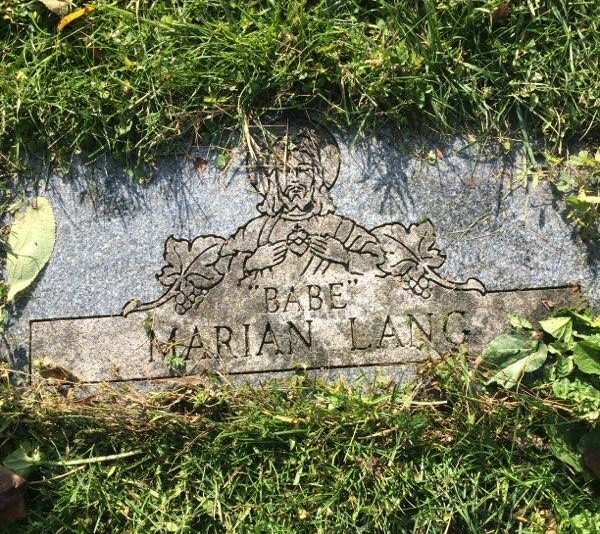
Babe
Notes and Bonuses
1. See the post entitled “Franz Kahles Comes to America”.
2. See the post entitled “The John Breuss Story”.
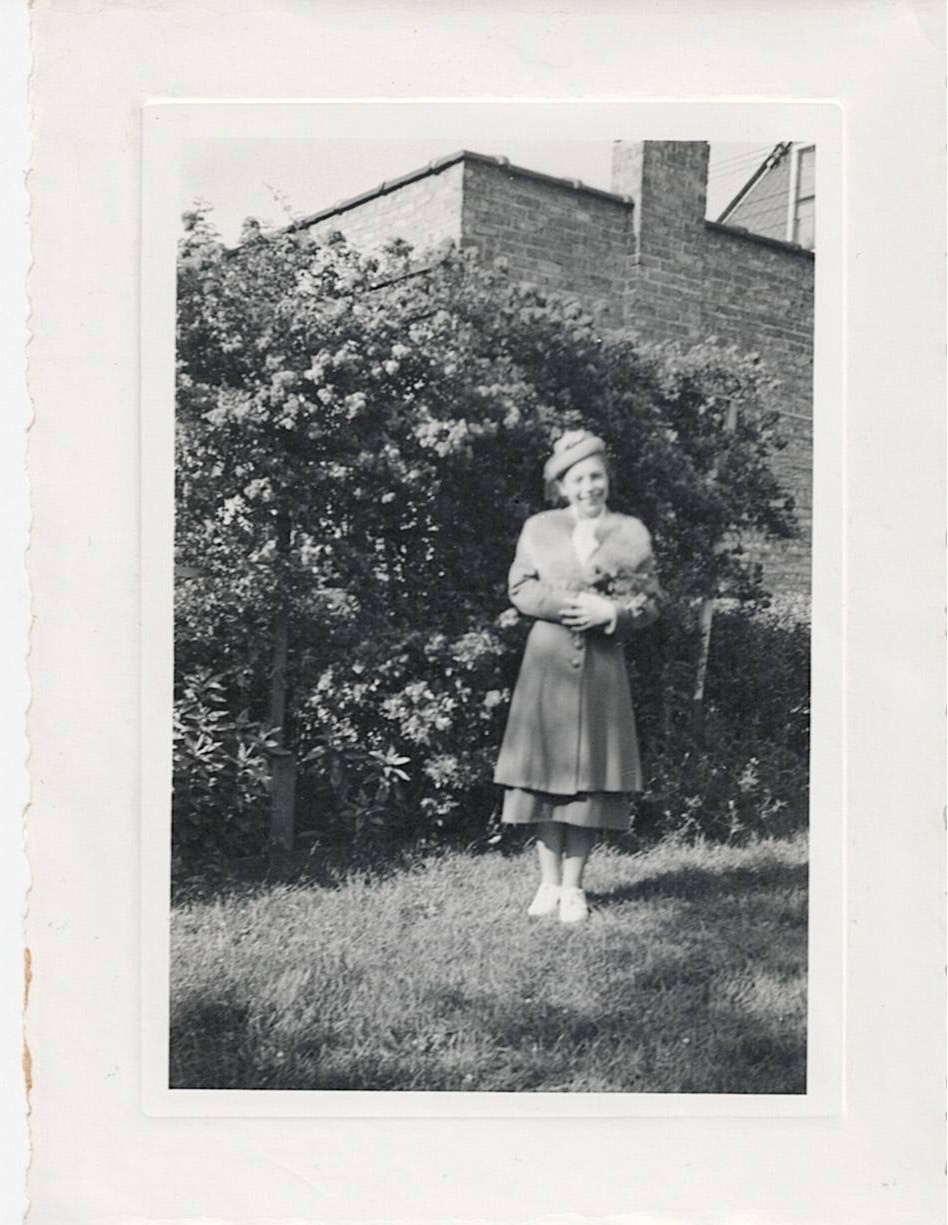
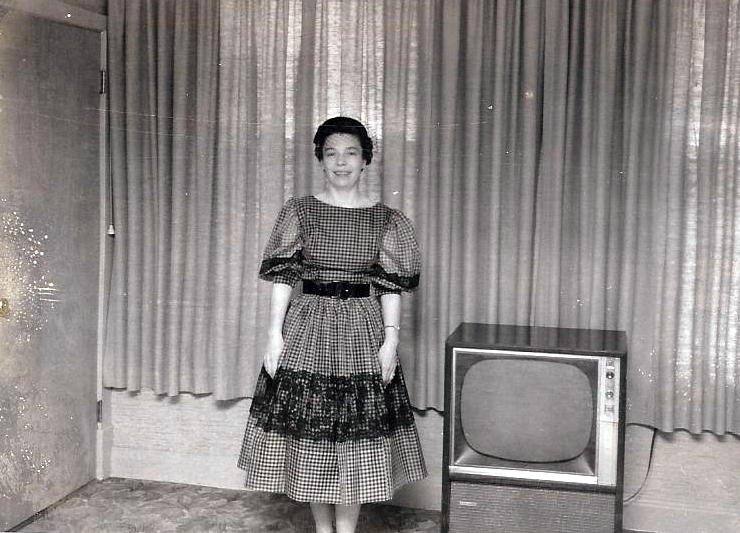
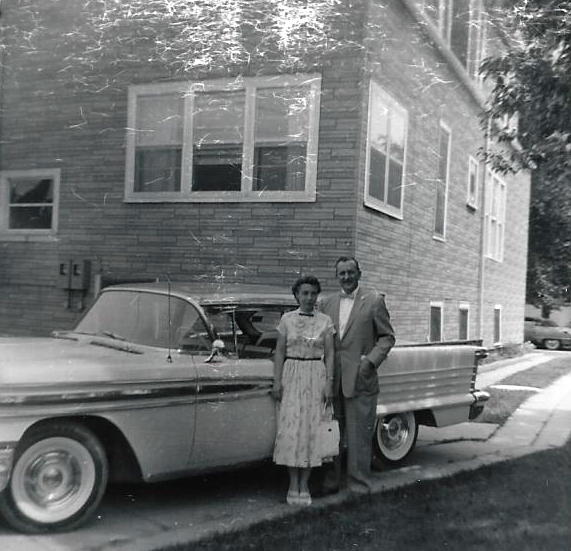
Great Granddaughter Annalise had some fun “colorizing” two old photos, guessing what it might have looked like at the time.
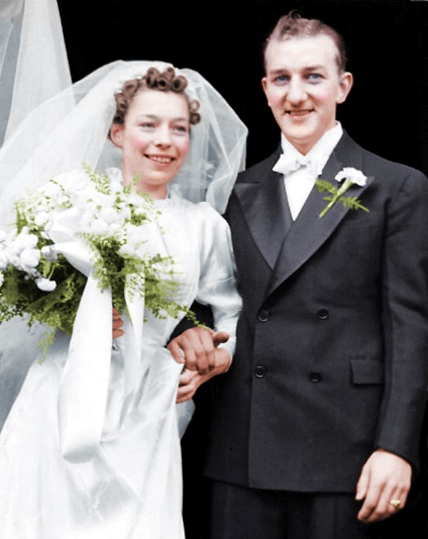
I think she nailed this one
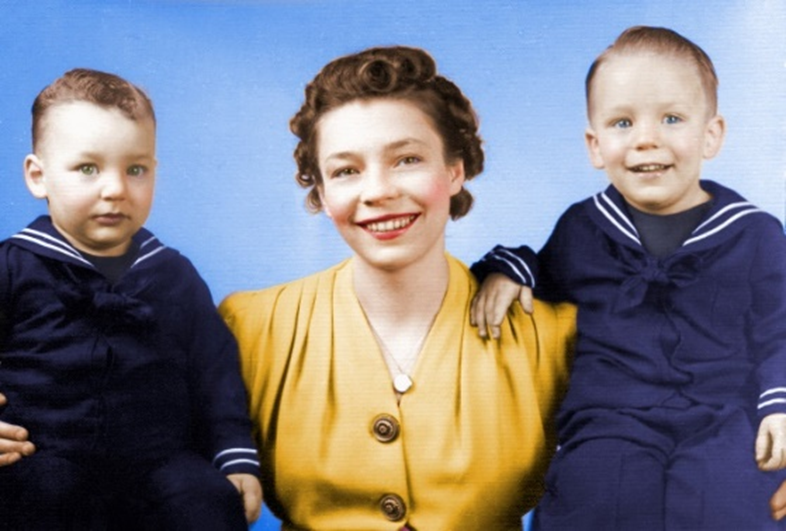
Who knows if that dress was yellow, but it sure looks great


Recent Comments